
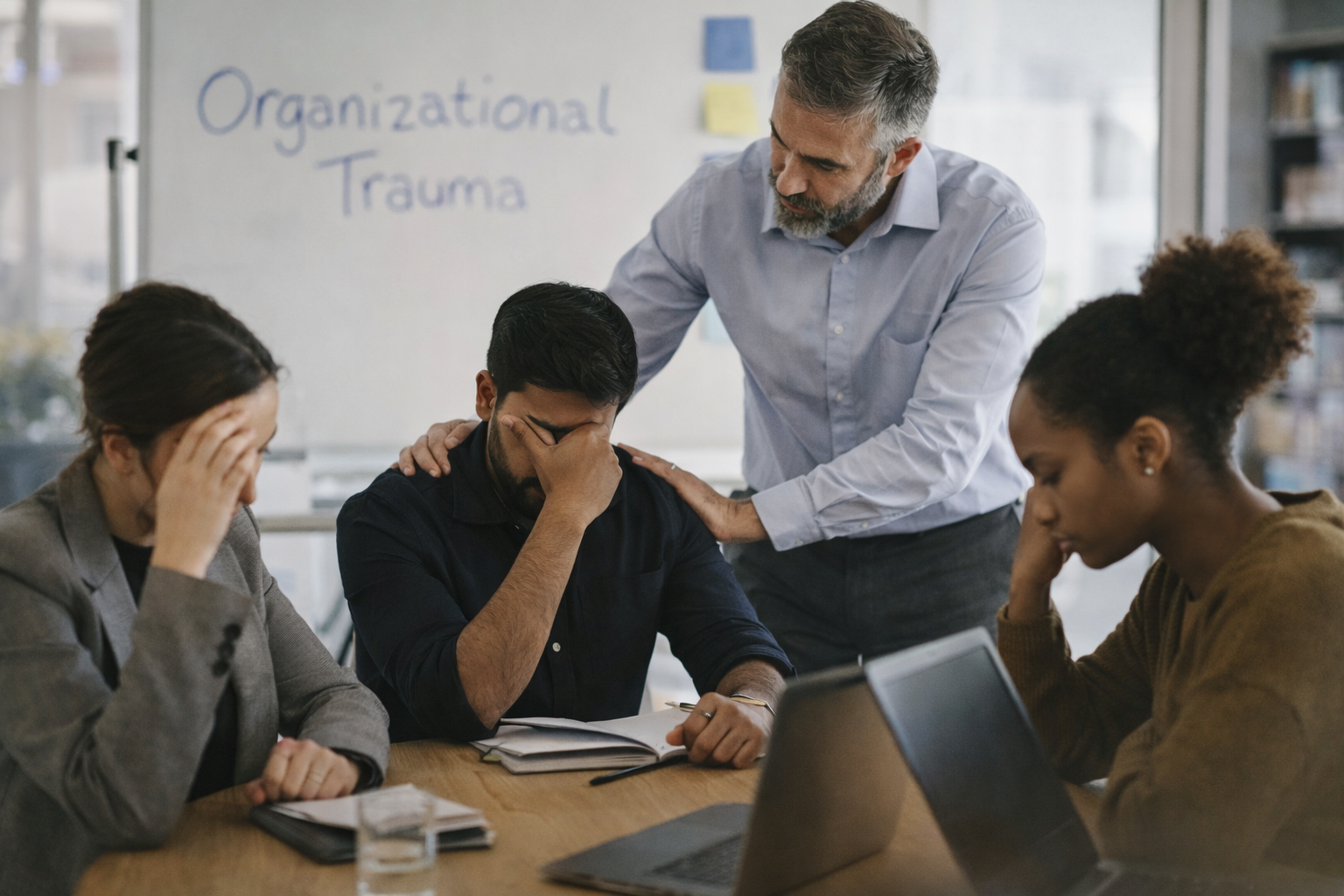
Something feels wrong, but nobody is saying it out loud.
People flinch at certain emails, meetings, or names…
That’s often a sign of organisational trauma, a shared psychological wound that forms after disruption, crisis, organizational change, or ongoing harm. It is shared sense that trust has cracked.
I became interested in this topic after noticing how workplaces sometimes change after difficult events. Teams that were once open become cautious. Communication tightens. Energy drops. It’s not just stress — it’s something deeper.
Trauma, in simple terms, is what happens when an event or environment overwhelms our ability to cope. Psychological trauma can sit in the body and nervous system, not just in thoughts. In a workplace, that can become workplace trauma that spreads through teams and processes, even when the original incident has passed.
Disclosure: If you click on my affiliate/advertiser’s links, I am going to receive a tiny commission. AND… Most of the time, you will receive an offer of some kind. It’ s a Win/Win!
Organizational trauma is the collective emotional and psychological impact that follows a shock or ongoing harm at work. It might come after layoffs, a toxic leader, a scandal, or even the long strain of the COVID-19 pandemic. In this article, I want to explore what organizational trauma really is, the signs to watch for, and practical ways teams can begin to heal. Because recovery is possible — and often starts sooner than people think.
As the Finnish saying goes, “Haava ei parane peittämällä” — a wound does not heal by covering it up.
Organisational trauma, explained without jargon
Organisational trauma isn’t just “people feeling stressed”. It’s what happens when a workplace absorbs distress and then reshapes itself around that distress, often without meaning to. Policies harden, trust drops, communication gets guarded, and staff start scanning for risk rather than doing their best work.
Our sense of safety is overwhelmed. This psychological trauma affects how people think, feel, and behave. When it happens in a workplace, the impact rarely stays with one person. It spreads through relationships, communication, and culture.
Definition box: Organisational trauma is the collective emotional, psychological, and cultural impact that occurs when a workplace experiences distressing events or ongoing harmful conditions.
As a result, you may see trauma responses that look like fight (conflict, blame), flight (avoidance, resignation), or freeze (silence, low initiative). Trauma triggers can be oddly specific, a meeting room, a Friday afternoon “quick call”, a certain tone in a Slack message. In many workplaces, the biggest driver is cumulative trauma, small harms that stack up until the system can’t self-correct.
Some people call this institutional trauma when it becomes embedded in “how things are done here”. The more normalised it becomes, the harder it is to spot. Yet the body keeps score. People may appear fine on the surface while operating with constant nervous system activation underneath.
Organizational trauma can involve…
* Trauma responses such as anxiety, withdrawal, or anger
* Trauma triggers linked to reminders of past events
* Cumulative trauma from repeated stress over time
* Loss of trust in leadership or systems
Common causes, from sudden shocks to slow-burn harm
Some organisational trauma examples are obvious because they hit fast: redundancies, abrupt restructuring, a merger that wipes out identity, or a public leadership scandal. Others build slowly, such as a toxic workplace culture, repeated humiliation, bullying, or constant “firefighting” with no recovery time.
Examples of organisational trauma and examples of institutional trauma often include:
- Layoffs, outsourcing, or repeated rounds of “cost saving” that keep everyone braced.
- Mergers and acquisitions where people lose role clarity, status, or safety overnight.
- Leadership scandals or misconduct
- Workplace violence, bullying, serious incidents, or sudden deaths at work.
- Ongoing micro-traumas, like unfair workloads, favouritism, or punishment for speaking up.
- Natural disasters affecting operations
- Repeated exposure roles (healthcare, social care, emergency services, journalism), where distressing stories and scenes become routine.
- Repetitive micro-traumas, such as constant criticism or unrealistic demands
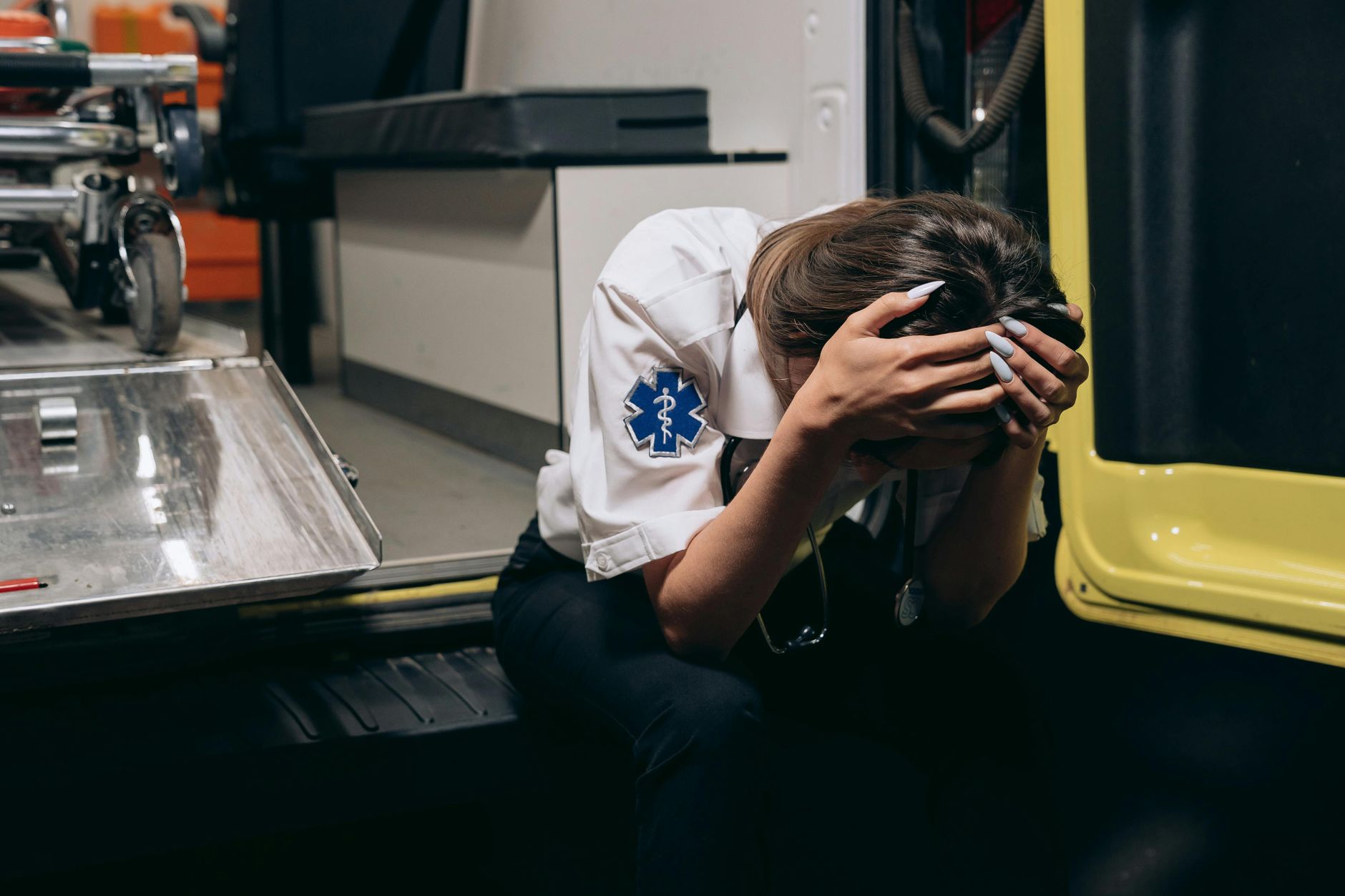 Photo by Mikhail Nilov
Sometimes there isn’t one dramatic event. Instead, harm builds slowly. Repeated stress without time to recover creates cumulative trauma.
Cumulative trauma is a big reason the “small stuff” matters. One hard week may pass. Ten hard months can change the whole culture. People feel powerless or unheard.

Why it spreads through a company like a ‘trust crash’
One thing I’ve learned is that trauma in organisations behaves a bit like contagion.
When people feel unsafe, the nervous system activates a fight-or-flight response. That changes behaviour:
Humans naturally copy each other’s sense of danger. When a team sees someone punished for raising a concern, everyone learns the rule: stay quiet. When leaders disappear during a crisis, the nervous system fills the gap with worst-case stories.
Under stress, the fight-or-flight response narrows attention. People become quicker to interpret neutral messages as threats. Meanwhile, psychological safety collapses, so learning and honest feedback slow down. In other words, a trust crash turns normal change management into a threat signal, even if the plan looks sensible on paper.
Leaders may lose credibility. Change management efforts stall because people don’t feel secure enough to engage.
Trauma changes behaviour
* Silence replaces openness
* Rumours replace facts
* Blame replaces accountability
* “Us versus them” thinking grows
In the psychology of organisations, trust is like oxygen. When it drops, everything becomes harder.
Organisational trauma vs institutional trauma, what’s the difference?
I initially confused these terms myself.
Organizational trauma usually refers to a specific workplace or company. Institutional trauma is broader — harm linked to systems such as healthcare, education, or justice where policies or structures create repeated distress.
so, the difference is mainly scale and reach. This quick comparison helps when you’re searching for “institutional trauma” or “trauma in organisations” and trying to apply it to your workplace.
| Term | What it usually means | Typical scope |
|---|---|---|
| Organisational trauma | Trauma held by a specific company, charity, team, or site | One organisation |
| Institutional trauma | Trauma caused or reinforced by a wider system (rules, power, norms) | A sector or society-level institution |
The takeaway: organisational trauma can happen in any workplace. Institutional trauma explains why some harms repeat across whole sectors, even when individual leaders change.
But they can also overlap. For example, healthcare workers during the pandemic experienced both organisational and institutional trauma.
Signs to watch for, in people, teams, and the whole culture
Recognising trauma symptoms early makes recovery easier.
Organisational trauma symptoms can look like burnout at first. Yet trauma symptoms often come with fear, shutdown, or reactivity, not just tiredness. Some people may also develop workplace PTSD symptoms after serious incidents, especially when the organisation responds poorly.
 Stress and shutdown can show up quietly across a team, even when no one says the word “trauma”. This image was created with AI.
A key clue is pattern. Do the signs of trauma keep showing up after “the issue” is supposedly resolved? Do the same triggers keep setting people off? If so, the organisation may be carrying the wound, not just the individuals.
What it can look like in individuals day to day
At an individual level, signs of trauma can be subtle. Someone might become hypervigilant, checking messages obsessively, reading tone as danger, or avoiding a manager’s name in conversation. Another person might go numb, doing tasks mechanically while feeling detached.
Signs of trauma at work can include:
* Anxiety, irritability, or emotional numbness
* Poor focus or indecision
* Sleep problems, fatigue, headaches
* Withdrawal from colleagues
* Increased conflict
* More sick days or presenteeism
* Substance use or coping behaviours
You may also see fight, flight, and freeze behaviours:
- Fight: snappy replies, blame, conflict in meetings.
- Flight: avoidance, distraction, increased sick leave, job hunting.
- Freeze: silence, low participation, “I don’t know” responses under pressure.
Some people experience patterns similar to workplace PTSD, especially after severe events.
Presenteeism often rises too. People show up, but they can’t think clearly or take risks. Over time, that costs creativity and quality.
Mastering the Art of Project Management: Your Path to Excellence. Begin your journey HERE.
What it looks like at team and organisation level
At team level, trauma in organisations often shows up as change resistance and low trust. People stop believing updates, even accurate ones, because previous promises didn’t hold. Gossip becomes a survival tool. Decisions slow down because nobody wants to be the next target.
Culture can also tilt towards control. Extra sign-offs appear, reporting becomes heavy, and managers focus on optics. On the other hand, some workplaces swing the opposite way, with no standards and constant chaos. Both are signs the system is trying to manage threat.
Organisational trauma symptoms may include:
* Loss of trust
* Cynicism and gossip loops
* Silos and blame
* Reduced innovation
* Higher turnover
* More grievances or complaints
* Inconsistent decisions
* “Keep your head down” mentality
Communication becomes guarded. Transparency breaks down. Change efforts fail because psychological safety has disappeared.
Enroll in the AI Product Manager Nanodegree Program for a comprehensive overview of AI and machine learning for business. You'll learn to build and train AI models, evaluate results, and measure success. Click HERE to get started NOW.
What is a trauma-informed organisation?
This was a new concept for me when I first came across it.
A trauma-informed organisation doesn’t turn work into therapy. Instead, it recognises the impact of trauma and designs leadership, policies, and culture to promote psychological safety, trust, and recovery.
If you’ve heard “what is trauma informed care?”, the core idea is the same: support people without re-triggering them, while still doing the job well. Trauma-informed support matters because it reduces avoidable harm. It also improves retention, learning, and trust, which are often the first things trauma steals.
Trauma-informed doesn’t mean “lower the bar”. It means “remove unnecessary threat so people can meet the bar”.
Understanding what trauma-informed care is — and why it matters — can transform leadership and culture.
What are trauma-informed practices at work?
Trauma informed practices often look basic, which is the point. Predictability calms the nervous system. Fairness reduces fear. Clear communication cuts rumour.
In practice, that can include transparency about decisions, steady meeting routines, and leaders who explain the “why” without spin. It also means making employee voice real, not symbolic. When people speak up and nothing changes, the silence afterwards gets louder.
How to implement trauma-informed care in organisations
Trauma-informed practices often include:
- Clear and predictable communication
- Fair and transparent processes
- Psychologically safe leadership behaviour
- Listening without judgement
- Realistic workloads
- Compassion combined with accountability
This approach is sometimes described as trauma-informed support.
A trauma-informed organisational toolkit should focus on systems, not slogans. Here’s an actionable set of steps that many workplaces can start immediately:
- Train leaders and managers in trauma-aware conversations, boundaries, and referral routes.
- Create safe reporting channels with clear timelines, anti-retaliation rules, and feedback loops.
- Fix fairness points (pay, promotions, workload allocation) where harm repeats.
- Redesign workload and pace after crises, including recovery time and realistic deadlines.
- Build peer support options, such as trained mental health first aiders or facilitated groups.
- Strengthen return-to-work plans after stress leave, with phased ramps and check-ins.
Some organisations create a trauma-informed organisational toolkit to guide these actions.
The goal is consistency. People heal faster when the organisation stops surprising them in painful ways.
The Swedish saying “Små steg leder också framåt” — small steps also move you forward — feels very relevant here.

How to heal organisational trauma, step by step
Healing does not happen by accident. It requires intentional action.
Healing starts when a workplace tells the truth about what happened, then backs that truth with visible change. Quick wins matter. However, they must connect to deeper repair, or they’ll feel like a cover-up.
First aid: stabilise, acknowledge, and communicate clearly
First, stabilise. Reduce overload, pause non-essential change, and stop unhelpful “performance theatre”. Next, acknowledge what happened in plain language. Avoid victimisation and blame. Validation of experience doesn’t mean agreeing with every detail, it means recognising impact.
Organisational Trauma First aid
* Name what happened
* Share what is known and unknown
* Stop harmful practices
* Reduce avoidable pressure
* Create predictable routines
Leader visibility helps too. During uncertainty, absence gets interpreted as contempt. Regular updates with predictable timing can lower threat, even when the news isn’t great.
Listening sessions help — but only if leaders follow up. Otherwise trust drops further.
Visible, honest leadership matters more than perfect answers.
Longer-term repair: rebuild trust, redesign work, and keep checking in
Longer-term repair needs structural fixes. Toxic workplace recovery usually fails when leaders offer perks but keep the same pressure points. Instead, rebuild trust by setting clear standards, holding people accountable, and making processes fair.
Trauma Recovery Involves:
* Fixing root causes such as workload or toxic behaviour
* Training leaders in safe and fair behaviour
* Providing support resources (EAP, counselling)
* Strengthening fair processes
* Monitoring recovery indicator
External support can help when trust is low. That might include trauma-informed consultants, EAP counselling, mediation, or independent investigations. Regular check-ins should focus on what’s changing in the system, not only how individuals are coping.
Things NOT To Do:
* Don’t gaslight experiences
* Don’t rush back to normal
* Don’t punish people for speaking up

The role of leadership in recovery
Leadership and trauma are tightly linked because leaders shape safety. When leaders deny, minimise, or rush past harm, staff learn that reality is unsafe to name. On the other hand, calm honesty can steady a whole organisation.
People look to leaders for safety signals.
Consistent behaviour, honesty, and fairness rebuild trust over time. Avoidance or denial does the opposite.
Surface fixes can backfire. People don’t need gimmicks, they need risk reduced, fairness restored, and work made doable again.
Most importantly, leaders must model the behaviour they want: respectful conflict, clear boundaries, and follow-through. Trust returns when words and actions match, again and again.
Frequently Asked Questions (FAQ)
What is organisational trauma?
Organisational trauma is the shared psychological and cultural impact a workplace experiences after a shock (like layoffs, a scandal, or a serious incident) or ongoing harm (like bullying, chronic overload, or unsafe practices). It’s bigger than one person having a bad day — it can reshape trust, communication, and how people behave at work.
What is trauma? Can you define trauma in simple terms?
Trauma is what happens when an experience overwhelms our sense of safety and ability to cope. In the workplace, trauma can be triggered by acute events (a sudden crisis) or cumulative harm over time. People often notice trauma symptoms in the form of anxiety, shutdown, irritability, poor sleep, or feeling on edge.
What are common organisational trauma examples?
Common examples of organisational trauma include abrupt layoffs, repeated restructures, merger chaos, sudden leadership changes, public scandals, workplace violence, serious accidents, or a death at work. Longer-term patterns can also create cumulative trauma, such as repetitive micro-traumas (constant criticism, fear-based management, or ongoing unfairness) with no time to recover.
What are the signs of organisational trauma in teams and culture?
At team and organisational level, signs can include loss of trust, cynicism, gossip loops, silos, blame, reduced innovation, higher turnover, more grievances, and a “keep your head down” culture. Communication often becomes guarded, transparency drops, and change efforts stall because people feel unsafe.
What is workplace PTSD, and is it the same as organisational trauma?
Workplace PTSD refers to post-traumatic stress symptoms linked to a traumatic experience at work, and it’s an individual-level experience. Organisational trauma is broader: it describes how a workplace collectively changes after distressing events or ongoing harm. If someone is experiencing severe symptoms or feels stuck in a fight-or-flight response, professional support can be important.
What is institutional trauma, and how is it different from organisational trauma?
Organisational trauma typically refers to the impact within a specific company or workplace. Institutional trauma often refers to harm linked to larger systems (for example, sectors such as healthcare, education, or justice) where policies, power imbalances, or repeated failures can create widespread distress. Both can overlap, especially when the same patterns repeat over time.
What is a trauma-informed organisation?
A trauma-informed organisation recognises that people may be affected by psychological trauma and designs work, leadership, and policies to increase safety, trust, choice, and support. It does not mean lowering standards — it means reducing avoidable harm and improving how people recover after difficult events.
What are trauma-informed practices at work?
Trauma-informed practices include clear and predictable communication, fair and transparent processes, psychologically safe leadership behaviours, early listening with follow-up, and realistic workload management. They also include creating safer ways to report concerns, reducing blame, and focusing on learning rather than punishment.
How do you implement trauma-informed care and trauma-informed support in an organisation?
Start with clarity and consistency: acknowledge what happened, share what is known and unknown, and remove ongoing harmful practices. Then build capability through leadership training, manager guidance, peer support, and access to counselling (e.g., EAP). Use a trauma-informed framework to align policies (investigations, grievances, performance processes) with fairness, transparency, and psychological safety, and track progress with pulse surveys and key people metrics.
What is a trauma-informed organisational toolkit, and what should it include?
A trauma-informed organisational toolkit is a practical set of resources that helps leaders and teams respond consistently. It may include communication templates, guidance for listening sessions, manager checklists, referral routes for support, reporting channels, and measures for tracking recovery (turnover, sickness absence, engagement, incident rates). The best toolkits also include clear “do not” guidance (e.g., don’t gaslight, minimise, or rush back to normal).
How long does it take to recover from organisational trauma?
Recovery time varies depending on severity, how long harm lasted, and whether root causes are fixed. Some teams stabilise in weeks; deeper trust repair can take months. The strongest predictor is consistency: visible leadership, honest communication, fair processes, and real changes to workload, safety, and behaviour.
As a Finnish proverb says, “Luottamus rakennetaan pisara kerrallaan ja menetetään ämpärillä” — trust is built drop by drop and lost by the bucket.
Conclusion
Organizational trauma is real, and it affects people, culture, and results.
Organisational trauma is a collective wound that can form after crisis, disruption, or ongoing harm. It shows up in signs of trauma such as hypervigilance, shutdown, distrust, and culture-wide change resistance.
But recovery is possible. The core steps are clear: Healing works best when organisations acknowledge the impact, restore safety, rebuild trust, and fix the systems that keep causing harm.
If you’re in a leadership role — or simply part of a team — you don’t need to solve everything at once.
Start small.
Choose one small step this week. Share a clear update with timelines, run a listening session with visible follow-up, or remove one harmful practice that everyone tiptoes around. Small, steady actions are how organisational trauma starts to loosen its grip.
Progress begins with honesty.
And as the Swedish saying reminds us, “Efter regn kommer solsken” — after rain comes sunshine.
Learn more about improving your business acumen:
- Organizational Trauma: What It Is, Signs to Watch For, and How to Heal
- Overcoming Perfectionism at Work Without Lowering Your Standards
- Why You’re Always Tired at Work (And What to Do About It)
- Reinvent or Be Left Behind: Why Dynamic Strategy Must Move at Market Speed
- Profit Engineering vs Profit Management: What Smart Businesses Do Differently