Most business plans do not fail on paper. They fail in reality.
I have seen business plans that looked polished, ambitious, and full of promise — yet still led nowhere.
Why? Because many business plans are written to sound impressive rather than to support clear thinking. They use attractive language, optimistic numbers, and neat-looking sections, but they do not truly test the business idea behind them.
That is where the real value of a good business plan lies.
A good business plan is not just a document for investors, lenders, or stakeholders. It is a thinking tool. It helps you slow down, ask better questions, and make stronger decisions before you commit time, money, and energy.
Better decisions come from understanding behaviour, signals, environment, and consequences.
This connects to how I approach decisions using the KrisLai Decision Framework™.
In this article, I want to walk through how to write an effective business plan step by step — but also what many business plans get wrong, where founders often misjudge the risks, and which checkpoints can save you from costly mistakes later.
Many business plans are written to sound impressive rather than to support clear thinking. A strong business plan should test assumptions, reveal risks, and help you make better decisions before committing time, money, and energy.
As the Finnish saying goes, “Hyvin suunniteltu on puoliksi tehty.” – Well planned is half done.
Disclosure: If you click on my affiliate/advertiser’s links, I am going to receive a tiny commission. AND… Most of the time, you will receive an offer of some kind. It’ s a Win/Win!
Key Ideas
- A business plan should help you think clearly, not just look professional.
- Many weak business plans are too optimistic, too vague, or too disconnected from real customer behaviour.
- A strong plan tests assumptions before they become expensive mistakes.
- Decision checkpoints make a business plan far more useful in practice.
- The best business plans connect goals, evidence, risks, timing, and consequences.

What Most Business Plans Get Wrong
Many business plans are not weak because the writer lacks ambition. They are weak because they try to sound certain before the business has earned that certainty.
Over the years, I have noticed a few common patterns.
1. They describe the business, but do not test the idea
Some plans explain what the business will sell, who the audience is, and why the idea sounds exciting. But they do not test whether customers will actually buy, how often they will buy, or what would make them choose this offer over another.
2. They confuse optimism with strategy
There is nothing wrong with being hopeful. But a business plan should not depend on everything going right. If your numbers only work in a best-case scenario, the plan is not strong enough yet.
3. They focus on features instead of value
Founders often know their product very well. The trouble is that customers do not buy features simply because they exist. They buy solutions, convenience, trust, status, relief, or results.
4. They skip the hard questions
A business plan should not just explain the opportunity. It should also face the uncomfortable parts honestly: weak margins, high competition, customer hesitation, operational pressure, slow sales cycles, or limited cash.
5. They are written for approval, not for decision-making
This is a big one. A business plan should not be written only to impress a lender, investor, or partner. It should help you make better choices. If it cannot do that, it is more presentation than plan.
What I Have Seen Go Wrong in Real Business Plans
I have seen business plans that looked excellent at first glance but were built on shaky assumptions.
One common problem is overestimating demand. It is surprisingly easy to assume that because an idea feels useful, the market will respond quickly. (I have seen this frequently on the BBC TV program “Dragon’s Den“.) In practice, customers may hesitate, compare, delay, or simply stay with what they already know.
I have also seen founders underestimate how long things take. Marketing takes longer. Sales conversations take longer. Trust takes longer. Cash pressures arrive sooner than expected.
Another pattern is building the plan around internal enthusiasm rather than external evidence. The founder is convinced. The team is excited. The branding is attractive. But the signals from the market are still weak.
That is why I always come back to this: a business plan should reduce self-deception, not decorate it.
In Swedish, there is a saying: “Man ska inte sälja skinnet förrän björnen är skjuten.” – Do not sell the skin before the bear is shot.
In business terms, do not assume the result before the market has confirmed it!
I have seen business plans that looked polished on paper but were built on shaky assumptions. In business, presentation matters, but clear judgement matters more.
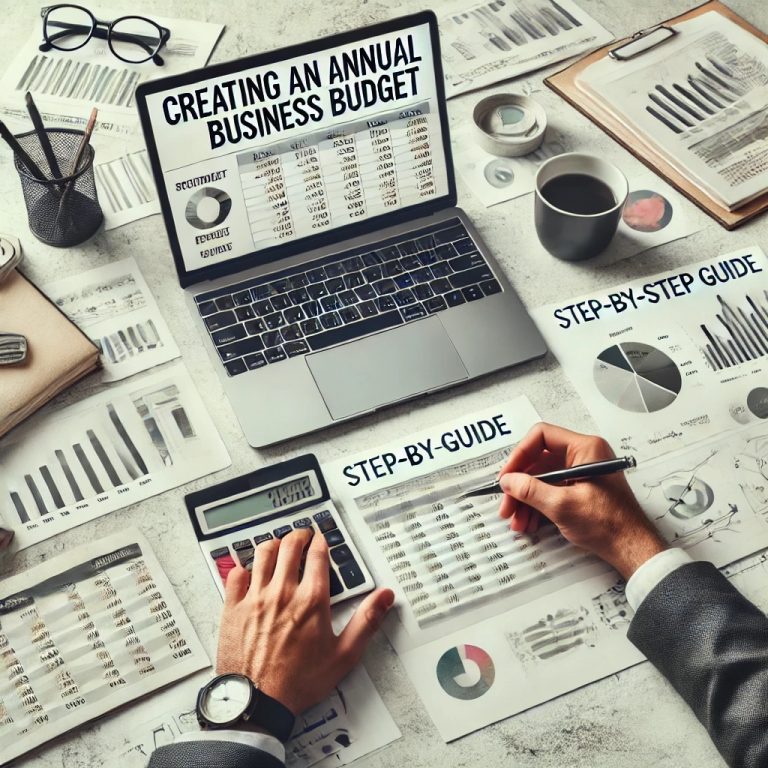
The Step-by-Step Guide to Writing a Business Plan That Works in Practice
Now let us turn the theory into something practical.
The steps below still cover the core parts of a strong business plan, but I would encourage you to approach each section as a decision tool, not a box-ticking exercise.
At every stage, ask yourself not only, “What should I write here?” but also, “What is this helping me understand more clearly?”

Step 1: Conducting In-depth Market Research and Analysis
Conducting in-depth market research and analysis is a crucial first step in any successful business strategy. By thoroughly understanding the market landscape, businesses can identify opportunities, assess competition, and make informed decisions to drive growth and profitability.
Market research involves gathering and analysing data related to target customers, industry trends, and market dynamics. This includes studying consumer behaviour, preferences, and purchasing patterns. Additionally, it involves evaluating competitor strategies, strengths, weaknesses, and market positioning.
Through comprehensive market analysis, businesses can gain insights into customer needs and preferences. This information allows them to develop products or services that align with customer demands. It also enables businesses to identify gaps in the market that they can capitalize on.
Further, conducting thorough market research helps businesses understand their competitive landscape. By assessing competitors’ offerings and strategies, companies can differentiate themselves by offering unique value propositions.
In conclusion, conducting in-depth market research and analysis is an essential step for businesses aiming to achieve success in today’s competitive environment. It provides valuable insights that inform strategic decision-making processes while helping companies stay ahead of the curve.
Do I know this market well enough to trust my assumptions, or do I still need stronger evidence from real customer behaviour, pricing response, or competitor activity?
Step 2: Defining Your Business Concept and Mission Statement
In the early stages of starting a business, it is crucial to define your business concept and mission statement. These two elements serve as the foundation for your entire venture, guiding your decision-making process and setting the tone for your company’s values and goals.
Your business concept refers to the unique idea or proposition that sets your business apart from others in the market. It encompasses your products or services, target audience, competitive advantage, and overall value proposition. By clearly defining your business concept, you can effectively communicate what makes your offering special and why customers should choose you over competitors.
Alongside your business concept, developing a mission statement is equally important. A mission statement articulates the purpose and core values of your company. It serves as a compass that guides strategic decisions while aligning employees and stakeholders around a common vision. A well-crafted mission statement communicates not only what you do but also why you do it – reflecting the passion and commitment behind your business.
Taking time to carefully define both your business concept and mission statement ensures clarity in communicating with potential investors, partners, employees, and customers. It provides a solid framework upon which you can build a successful enterprise that resonates with its target market while staying true to its core values.
Decision Checkpoint
Can I explain clearly what problem I solve, for whom, and why my offer is meaningfully different?
Step 3: Outlining Your Products or Services Offerings and Pricing Strategy
In this crucial step, we will go into the process of outlining your products or services offerings and developing an effective pricing strategy. By carefully considering the keywords and understanding your target audience’s needs, you can create a comprehensive plan that aligns with your business objectives.
When outlining your products or services offerings, it is essential to clearly define what you are offering to customers. This includes identifying the core features, benefits, and unique selling points of each product or service. By highlighting these key aspects, you can effectively communicate the value proposition to potential customers.

Additionally, developing a well-thought-out pricing strategy is vital for business success. This involves determining the most appropriate pricing model (e.g., cost-plus pricing, value-based pricing) based on factors such as production costs, market demand, competition analysis, and customer perception of value. A well-defined pricing strategy ensures that your products or services are priced competitively while allowing for profitability.
pricing strategy, you can position your business for success in today’s competitive marketplace.
Decision Checkpoint
Is my pricing based on real customer value and commercial reality, or simply on what I hope people will pay?
Step 4: Developing a Comprehensive Marketing and Sales Plan
In order to achieve success in business, it is paramount for organizations to develop a comprehensive marketing and sales plan. This strategic approach allows businesses to effectively promote their products or services, reach their target audience, and ultimately drive revenue growth.
Developing a comprehensive marketing and sales plan involves several key steps. Firstly, it is important to conduct thorough market research to gain insights into the industry landscape, customer preferences, and competitor strategies. This information serves as the foundation for developing targeted marketing campaigns and sales strategies.
Next, businesses should define their target audience by identifying specific demographics, psychographics, and buying behaviours. By understanding the needs and wants of their ideal customers, organizations can tailor their marketing messages and sales tactics accordingly.
Further, businesses must establish clear marketing objectives that align with overall business goals. These objectives should be specific, measurable, achievable, relevant, and time-bound (SMART). They provide a roadmap for guiding marketing efforts towards desired outcomes.
Once objectives are defined, businesses can proceed with developing an integrated marketing mix that includes various channels such as advertising, public relations, digital marketing, social media campaigns etc. Each channel should be carefully selected based on its effectiveness in reaching the target audience.
In addition to marketing activities, organizations must also develop a robust sales strategy that outlines how they will convert leads into customers. This may involve implementing effective lead generation techniques such as cold calling or email outreach campaigns. It also includes designing a structured sales process that guides prospects through each stage of the buying journey.
Finally, do not forget to regularly monitor and evaluate the effectiveness of your marketing and sales efforts. This allows you to identify areas of improvement or make necessary adjustments to maximize results.
By following these steps in developing a comprehensive marketing and sales plan, organizations can position themselves for success in today’s competitive marketplace while effectively reaching their target audience and driving revenue growth.
Decision Checkpoint
Do I know how customers will realistically find me, trust me, and choose me — not just how I want them to?
Step 5: Creating an Organizational Structure and Staffing Plan
In order to ensure the smooth functioning and success of any organization, it is crucial to establish a well-defined organizational structure and develop a comprehensive staffing plan. This step plays a pivotal role in determining the allocation of responsibilities, reporting relationships, and overall workforce composition.

Creating an effective organizational structure involves identifying key roles and positions within the organization and establishing clear lines of authority and communication. By defining the hierarchy, departments, teams, and reporting structures, organizations can facilitate efficient decision-making processes and promote effective collaboration among employees.
Simultaneously, developing a robust staffing plan is essential for ensuring that the right individuals with the necessary skills and qualifications are recruited to fill each position within the organization. This includes conducting thorough job analyses to identify job requirements, defining job descriptions that outline responsibilities and expectations, as well as implementing effective recruitment strategies to attract top talent.
By carefully crafting an organizational structure aligned with the goals of the organization and implementing a strategic staffing plan, businesses can enhance productivity, optimize resource allocation, foster employee engagement, and ultimately achieve long-term success.
Decision Checkpoint
Do I truly need this structure now, or am I designing for a future version of the business that does not yet exist?
Step 6: Creating a Financial Projection and Funding Strategy for Your Business

In order to ensure the success and sustainability of your business, it is crucial to develop a comprehensive financial projection and funding strategy. This step will allow you to anticipate future financial needs, make informed decisions, and attract potential investors or lenders.
Crafting a financial projection involves forecasting your business’s revenue, expenses, and cash flow over a specific period of time. By analysing historical data, market trends, and industry benchmarks, you can make reasonable assumptions about your future financial performance. This projection will serve as a roadmap for managing your finances effectively and identifying potential risks or opportunities.
Simultaneously, developing a funding strategy is essential to secure the necessary capital for your business operations. Whether you are seeking external funding from investors or applying for loans from financial institutions, presenting a well-thought-out funding strategy is crucial. It demonstrates your understanding of the financial needs of your business and how you plan to allocate resources.
To develop an effective financial projection and funding strategy, consider factors such as market conditions, competitive landscape, growth projections, operational costs, marketing expenses, and anticipated revenue streams. Conduct thorough research and seek professional advice if needed to ensure accuracy in your projections.
Remember that transparency and credibility are key when presenting your financial projection to potential investors or lenders. Clearly communicate the assumptions made in developing the projections as well as any risks associated with them. This will help build trust in your business’s ability to generate returns on investment.
By taking the time to carefully create a comprehensive financial projection and funding strategy for your business in Step 6 of this process, you will be better equipped to navigate the challenges of managing finances while positioning yourself for growth and success in the long run.
Decision Checkpoint
If sales are slower, costs are higher, or growth takes longer than expected, does this business still have a credible path forward?
A Simple Filter I Use When Looking at a Business Plan
When I read a business plan, I do not just look for ambition. I look for signals of grounded thinking.
A strong business plan usually answers five questions well:
- Is the problem real?
- Is the customer clearly understood?
- Is the offer genuinely valuable?
- Is the commercial model realistic?
- Is the founder thinking clearly about risk, timing, and execution?
If those five areas are weak, the document may still look polished, but the decision quality behind it is often poor.
That is one reason I believe business planning should never be separated from decision-making. A plan is only as useful as the thinking that shaped it.
Better decisions come from understanding behaviour, signals, environment, and consequences.
This connects to how I approach decisions using the KrisLai Decision Framework™.
Final Thought: A Business Plan Should Help You Think, Not Just Impress
A well-written business plan still matters. It can help you communicate your idea clearly, attract support, and stay focused.
But its deeper value is something else.
A business plan gives you a structured way to test your own thinking before the market tests it for you.
That is why I would never treat it as a formal document alone. I see it as a decision tool. A chance to challenge assumptions, examine risks, and build a business on something stronger than excitement.
If your plan helps you see more clearly, decide more carefully, and act more wisely, then it is already doing its job.
As the Chinese saying goes, “磨刀不误砍柴工.” – Sharpening the axe does not delay the cutting of firewood.
Taking time to plan properly is not wasted effort. It is often what makes the real work worth doing.
If you enjoy exploring the ideas behind better business decisions, you may find the Business Thinking Hub useful.

Why not read one of these articles next:
- How AI Is Changing Search Behaviour (And What Businesses Must Do Now)
- Decision-Making Framework Examples: The KrisLai Method in Action
- The KrisLai Decision Framework: A Better Way to Make Business Decisions
- Micro vs Macro Marketing: When to Target Broad Audiences vs Niche Customers
- Customer Intent Marketing: How to Turn Buying Signals Into Sales