
Why Dressing Professionally Still Matters
What you wear is part of the first impression you make, often before you say a word. Clothes will not make up for weak skills, but they signal attention to detail, respect for the occasion and readiness to be taken seriously. When someone has to judge you quickly, in an interview, a client meeting or a networking event, appearance is one of the few things they can see.
Disclosure: If you click on my affiliate/advertiser’s links, I am going to receive a tiny commission. AND… Most of the time, you will receive an offer of some kind. It’ s a Win/Win!
Dressing well also works inwards. Most people find they feel more focused and confident when they are comfortable with how they look, and that confidence shows in how they speak and present. If you want to build on that, my guide to public speaking skills for modern business covers the other half of making a good impression.
Think of your clothing as part of your personal brand: consistent, appropriate and a fair reflection of how you want to be seen. (For the wider picture, see Mastering Marketing and Branding for Success.)
The Different Types of Business Attire and When to Wear Them
There is no single standard. The right outfit depends on your industry, the company culture and the occasion, so when in doubt, ask or look at what people already in the role wear. These are the main categories:
- Business formal: a tailored suit (or equivalent), dress shirt or blouse, tie where appropriate, and polished shoes. Typical for law, finance, board meetings, formal ceremonies and senior client meetings.
- Business professional: close to business formal, with a little more room for personal style, such as a blazer with tailored trousers or a skirt.
- Business casual: a balance of polished and comfortable, such as chinos or tailored trousers with a collared shirt, knitwear or a blouse. Common in many offices today.
- Smart casual: the most relaxed of the four, for example well-fitted dark jeans or chinos with a blazer or a neat top. Suits creative and start-up settings.
Dressing for video calls deserves a mention too. With hybrid working, much of your first impression now happens on screen, so what you wear from the waist up (and the lighting behind you) matters. Plain, solid colours usually look best on camera. For more on working this way, see how to manage hybrid and remote teams.
A useful rule of thumb: dress one step above what you expect others to wear. You will rarely regret it, whereas being underdressed is hard to fix on the day.
Tips for Men: How to Dress Professionally in a Business Setting
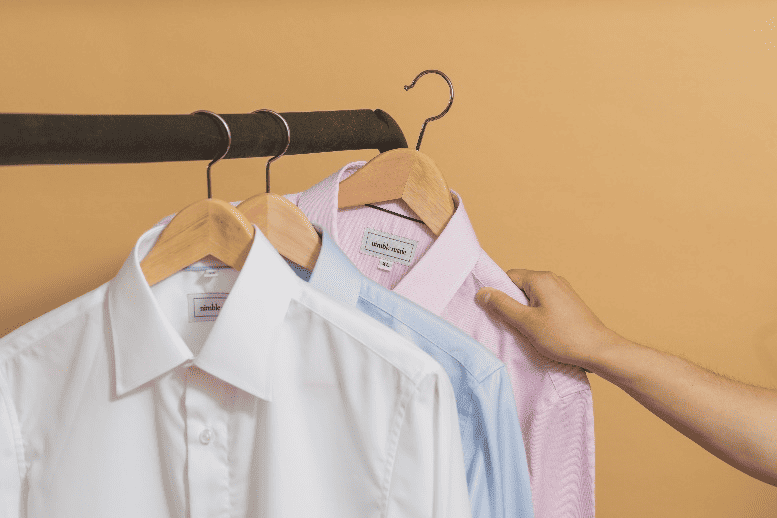
Photo by Nimble Made on Unsplash
- Know the dress code. Check what is expected in your workplace or industry, from formal business attire to business casual, and follow it. It shows respect for the culture you are joining.
- Invest in fit before price. A well-fitting, mid-priced suit beats an expensive one that hangs badly. A good tailor is the best bargain in your wardrobe.
- Keep colours classic. Navy, charcoal, grey and white are safe foundations. Avoid loud patterns that pull attention away from you.
- Check the grooming. Neat hair, a tidy beard or clean shave and clean nails matter as much as the clothes.
- Choose accessories with restraint. A simple tie, belt and watch that match the outfit are enough.
- Look after your shoes. Clean, polished leather shoes that match the formality of the outfit, with socks long enough to cover your legs when you sit.
- Keep everything pressed. Iron your clothes, or choose wrinkle-resistant fabrics for busy days.

Tips for Women: Dressing with Style and Confidence
The aim is the same for everyone: a polished look that fits your industry and still feels like you. Women often have a wider range of options, which means more choice but also more room for second-guessing. These principles help:

Photo by Artem Beliaikin on Unsplash
- Start with fit. Well-tailored pieces that suit your shape look professional at almost any price. Keep clothes clean, pressed and in good condition.
- Match the culture. Suits, tailored dresses or smart separates work almost everywhere. Choose lengths and necklines that you are comfortable in for a whole day of meetings.
- Build on neutrals. Black, grey, navy and white give you a base you can mix and match, with colour added through a top, scarf or jacket.
- Prioritise comfortable shoes. Choose pairs you can walk and stand in all day, in a style that suits the setting.
- Keep accessories simple. Understated jewellery and a classic belt or bag finish an outfit without taking over.
- Finish with grooming. Tidy hair and nails and work-appropriate make-up complete the look.



Photo by Andrea Piacquadio
The Dos and Don’ts of Business Attire: Common Mistakes to Avoid
Most dress mistakes come down to a handful of habits. Do: learn your company’s guidelines (they can differ by team or occasion), keep clothes clean and well-fitted, and match the formality of the event. Don’t: ignore the dress code, dress too casually (t-shirts, trainers and ripped jeans are rarely acceptable unless policy says so), or overdo it with extravagant outfits that make you look as if you are trying too hard.
Wrinkled or stained clothing suggests a lack of attention to detail, so a quick iron and prompt stain treatment go a long way. Keep accessories subtle so that attention stays on your work and your words rather than your outfit.
Dress Codes and the Law: What Employers and Employees Should Know
If you manage people, your dress code needs to be fair as well as smart. In the UK, Acas guidance on dress codes says employers must avoid unlawful discrimination, must treat men and women equally, may set standards for health and safety, and should consult employees and apply the code consistently. Religious dress deserves particular care. Employees should check their own contract or staff handbook before assuming what is acceptable.
Conclusion: Dress for the Role You Want and the Impression You Intend
Dressing professionally is not about expensive labels or following rules for their own sake. It is about showing respect for the people and the occasion, and feeling comfortable enough to do your best work. Learn the dress code, fit your clothes well, keep the details tidy and adapt to the setting, including the screen. Do that and your appearance will support your ability rather than distract from it.
- Digital Transformation for SMEs: 7 Questions Before You Invest
- Cybersecurity for Businesses: 7 Decisions Leaders Must Make
- How AI Is Changing Search Behaviour (And What Businesses Must Do Now)
- 7 Decision-Making Framework Examples for Business Leaders
- Business Decision-Making Framework: The KrisLai Method